












If you own or manage a commercial building with a low-slope roof, there’s a good chance your next roof will be a single-ply membrane. The two most common choices are TPO (thermoplastic polyolefin) and EPDM (ethylene propylene diene monomer, often called “rubber roofing”). Both are proven, both are widely installed across the Midwest, and both can deliver decades of service. But they behave differently, and those differences matter in a climate like Chicago’s, where roofs face humid summers, heavy snow, and relentless freeze-thaw cycles.
Here’s a practical comparison to help you decide which membrane fits your building.
What Is EPDM?
EPDM is a synthetic rubber membrane that has been used on commercial roofs since the 1960s. That long track record is one of its biggest selling points: building owners know how it ages. EPDM is typically black, though white versions exist, and is installed in large sheets that minimize the number of seams. Seams are joined with specially formulated seam tape or adhesives.
Learn more on our EPDM roofing page.
What Is TPO?
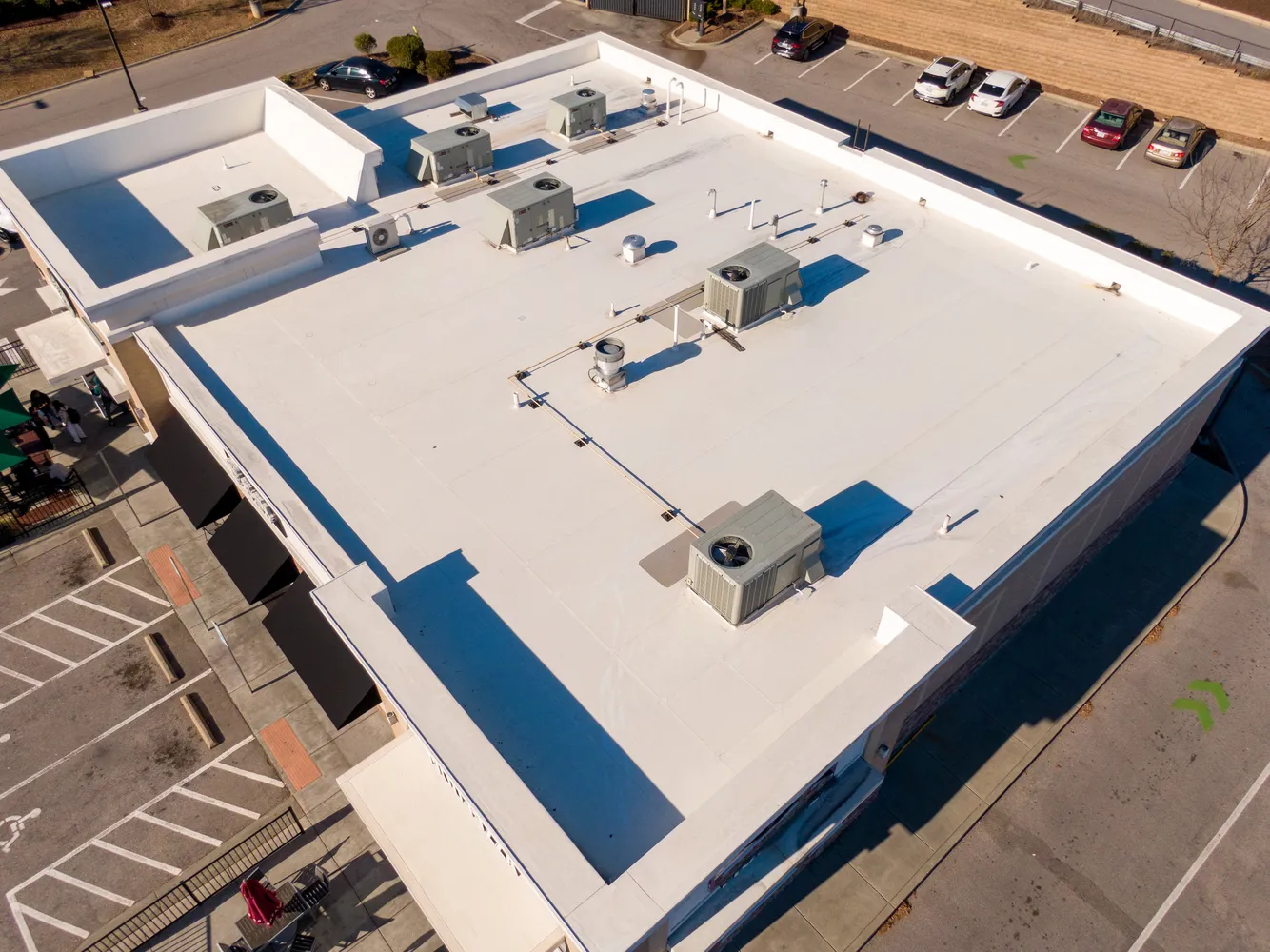
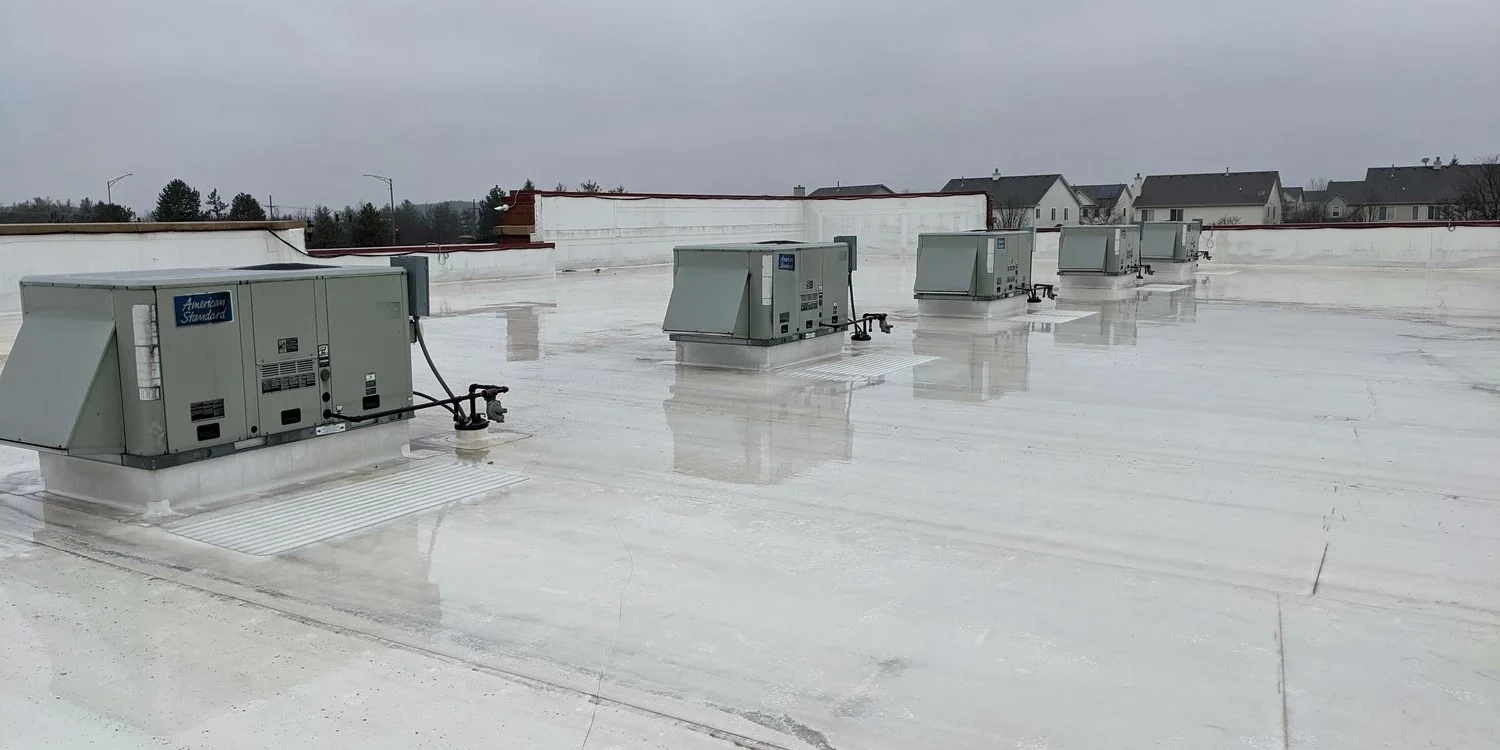
TPO is a thermoplastic membrane introduced in the 1990s that has since become one of the most commonly installed commercial roofing systems in the United States. It is usually white and highly reflective. Its defining feature is heat-welded seams: installers use hot air to fuse the sheets together into a continuous, monolithic layer.
Learn more on our TPO roofing page.
Seams: The Biggest Practical Difference
On any single-ply roof, seams are where problems most often start.
- TPO seams are heat-welded. When done correctly, the weld is often stronger than the membrane itself and highly resistant to water intrusion.
- EPDM seams rely on tape or adhesive. Modern seam tapes are far more reliable than older glued seams, but adhesive seams can still loosen over time, especially with thermal movement and poor original installation.
For buildings where leak prevention is the top priority, TPO’s welded seams are a significant advantage, provided the welding is done by experienced crews and probed for quality.
Performance in Cold Weather and Freeze-Thaw Cycles
Chicago winters are hard on roofs. Membranes contract in extreme cold, snow loads sit for weeks, and melting snow can refreeze around drains and edges (see our ice dam removal service).
- EPDM stays highly flexible at very low temperatures. It handles expansion and contraction exceptionally well, which is a major reason it has remained popular in northern climates.
- TPO performs well in cold climates too, but it is stiffer than EPDM. That flexibility gap matters most during installation in cold weather and around complex details.
Edge: EPDM, especially on roofs with a lot of movement.
Energy Efficiency: Black vs. White
- White TPO reflects a large share of solar radiation, keeping the roof surface cooler and reducing summer cooling loads. For buildings with big cooling demands, like warehouses, retail spaces, and data or server rooms, this can be meaningful.
- Black EPDM absorbs heat. In a heating-dominated climate like Chicago’s, that can slightly help in winter, but summer cooling costs are usually the bigger factor for commercial buildings.
Note that Chicago’s energy code has long included reflectivity requirements for many low-slope roof projects. Your contractor should confirm what applies to your building before you choose a color or membrane. If you want a white surface with EPDM’s other properties, white EPDM is available.
Edge: TPO for cooling-heavy buildings.
Durability, Punctures, and Hail
- EPDM has excellent resistance to hail and weathering and is easy to patch when punctured. Thicker EPDM (60 or 90 mil) offers added protection.
- TPO is tough and puncture-resistant, particularly in thicker gauges (60 or 80 mil). Formulations vary between manufacturers, so product choice matters. Working with established manufacturers like GAF or Duro-Last reduces that risk.
Both membranes benefit from walkway pads around rooftop equipment, where most foot-traffic damage happens.
Chemical and Grease Exposure
If your roof has restaurant exhaust vents, grease, or oils, material choice becomes critical. EPDM does not tolerate oils and grease well; they can cause swelling and deterioration. TPO performs better, but for heavy grease exposure, PVC is often the strongest option. See our comparison of TPO vs. PVC roofing and our overview of PVC roofing.
Repairs and Long-Term Maintenance
- EPDM repairs are straightforward: clean, prime, and patch. Even older EPDM can typically be repaired reliably.
- TPO repairs usually involve heat-welding a new patch. On aged TPO, the surface may need extra preparation before new material will weld properly.
Either way, routine inspections catch small issues before they become leaks. Our roof maintenance programs are designed around exactly this.
Installation Methods
Both membranes can be installed in three main ways:
- Fully adhered. The membrane is glued to the insulation board, giving a smooth, wind-resistant surface.
- Mechanically attached. It is fastened through the insulation to the deck, with fasteners concealed in the seams.
- Ballasted. The membrane is held down with stone or pavers (more common with EPDM), which requires adequate structural capacity.
The right method depends on your deck type, wind exposure, and building height.
Side-by-Side Summary
| Factor | TPO | EPDM |
| Seams | Heat-welded | Tape / adhesive |
| Standard color | White (reflective) | Black (white available) |
| Cold-weather flexibility | Good | Excellent |
| Track record | Since 1990s | Since 1960s |
| Grease resistance | Moderate | Poor |
| Ease of repair | Good (welded patch) | Very easy (patch) |
So Which One Should You Choose?
Choose TPO if your building has high cooling demand, you want welded seams, or you need a reflective surface.
Choose EPDM if your roof experiences a lot of movement, you value a long, proven track record, or you want simple long-term repairs.
In reality, the condition of your deck, the insulation, drainage, and the quality of installation matter as much as the membrane itself. For a broader look at all options, see what is the best material for a flat roof. The EPDM Roofing Association and SPRI, the single-ply roofing industry association, also publish helpful technical resources.
FAQ
Is TPO better than EPDM?
Neither is universally better. TPO excels in reflectivity and seam strength, and EPDM excels in flexibility and proven longevity.
Can you put TPO over EPDM?
In many cases, yes, as a roof recover, if the existing roof and insulation are dry and code allows it. An inspection determines whether that’s possible.
Which lasts longer in Chicago?
Both can last for decades when properly installed and maintained. Installation quality and maintenance usually matter more than the membrane type.
Talk to a Chicagoland Commercial Roofing Specialist
All Roofs Inc. installs and repairs both TPO and EPDM systems and can recommend the right membrane based on your building, not a sales quota. Request a free estimate or browse our recent commercial projects.